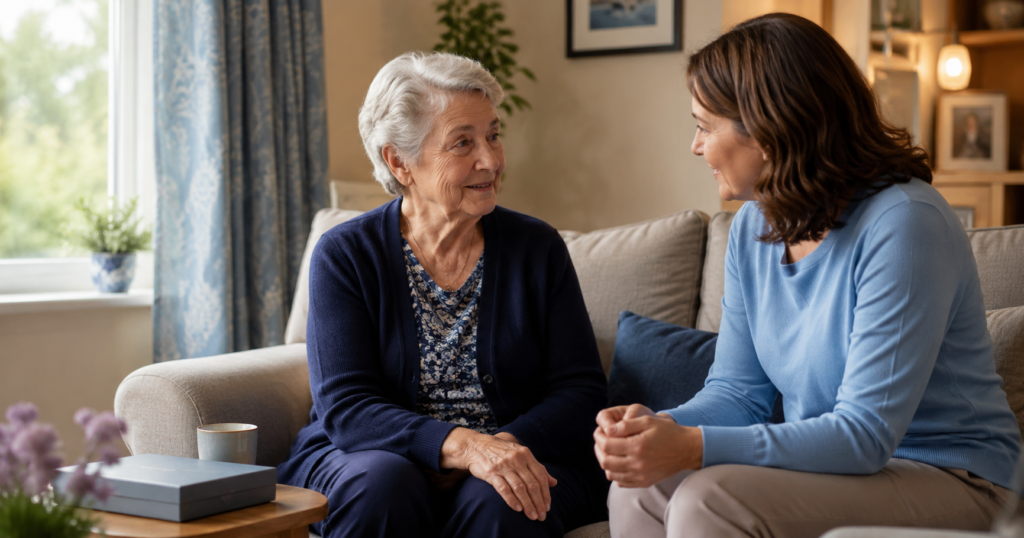
Choosing a personal alarm can be emotionally sensitive. For an older person, the suggestion may feel like a loss of independence or an uncomfortable reminder that their circumstances are changing. For relatives and carers, it may follow a frightening fall, illness or growing concern about someone living alone.
The best conversations begin with the person’s own priorities. Ask what would help them feel safer, which style they would actually wear and who they would want contacted in an emergency. A personal alarm should support independence and confidence—not make someone feel watched or controlled.
This comparison looks at five UK personal-alarm services offering digital home alarms, automatic fall detection, GPS options or a combination of these features.
Our comparison method
This is an editorial desk-research comparison, not a hands-on laboratory test. We reviewed publicly available information from providers and independent guidance, considering:
- Digital compatibility
- Home, garden and out-of-home coverage
- Manual alarm buttons and automatic fall detection
- Access to 24-hour monitoring
- Wearable choices
- GPS and location features
- Published prices and setup charges
- Contract flexibility
- Industry accreditation
- Information provided about limitations
Prices and product details were checked on 19 August 2026 and may change. Some advertised prices require annual payment or eligibility for VAT relief.
Personal alarms, dementia and daily routines
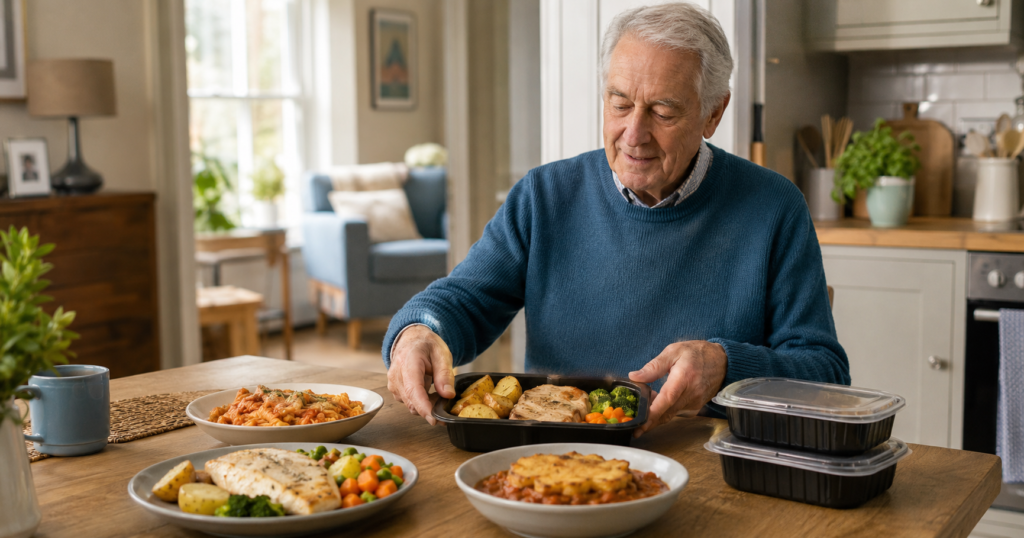
As dementia progresses, some people may find it increasingly difficult to keep track of time or remember whether they have eaten, had a drink or taken their medication. Day-and-date clocks, timed voice prompts, reminder alarms and automatic pill dispensers can help cue familiar routines such as breakfast, lunch, dinner, hydration, appointments and medication.
These devices are different from the emergency personal alarms compared below. An emergency alarm helps someone call for assistance after a fall or when they feel unsafe, but it may not provide scheduled daily reminders. When choosing technology for someone living with dementia, check whether it offers timed prompts, whether the person can understand and use it comfortably, and whether a trusted family member can manage reminders remotely.
Reminder technology should be introduced with the person’s involvement and used to support—not replace—appropriate care and regular human contact. If missed or repeated medication is a concern, ask a pharmacist, GP or other healthcare professional for advice. The NHS provides more information about daily living aids for people with dementia.
Quick comparison
| Provider | Best for | Advertised starting price | Important consideration |
|---|---|---|---|
| Taking Care | Best overall range | £22.49 a month, plus £69.99 setup | GPS and fall-detection plans cost more |
| Telecare24 | Best-value digital alarm | £15 a month annually, plus £45 setup | Lowest prices require annual payment |
| Careium | Best flexible digital service | £15 a month annually | Check activation costs before ordering |
| LifeConnect24 | Best digital response features | GPS options from £30 a month annually | Avoid its older analogue model |
| Careline365 | Best all-inclusive fall-detection choice | £99 device, plus £1 a day | Higher first-year cost |
The right choice depends on where the alarm needs to work, whether the person will wear it consistently and what should happen when it is activated.
1. Taking Care — best overall range
Taking Care offers one of the broadest selections, including home alarms, fall-detection pendants, GPS alarms, watches and a dementia-tracker watch. It also provides the personal-alarm service promoted through Age UK.
Its standard Digital Personal Alarm works around the home and garden. At the time of checking, it cost £22.49 a month with a £69.99 setup charge. The Digital Fall Alarm was £28.49 a month, while Taking Care Anywhere—combining home coverage, GPS and fall detection—was £31.49 a month with a £70 setup charge.
Strengths include:
- Digital connection without requiring a traditional landline
- Home, fall-detection and mobile-GPS options
- Neck- and wrist-worn choices
- A 24-hour UK monitoring team
- GPS location sharing during an emergency on suitable plans
- A 30-day money-back guarantee
- Monthly and annual payment options
Taking Care is our strongest all-round choice because families can choose among several levels of support without moving to another provider as needs change.
The main drawback is cost. Someone wanting automatic fall detection or protection outside the home will pay more than for a basic pendant plan. Compare the complete first-year cost, including setup, before ordering.
2. Telecare24 — best-value digital alarm
Telecare24 offers clearly priced digital plans for home, fall-detection and GPS use.
When paid annually, its Digital Pendant Alarm was advertised at £15 a month, the Digital Fall Alarm at £19 a month and the GO Active GPS Alarm at £21 a month. New customers pay a £45 setup fee. These are VAT-exempt prices for eligible customers.
Its digital home plans include:
- No traditional telephone line required
- A wearable that can be worn around the neck or wrist
- Water-resistant equipment
- Up to 200 metres of stated home-and-garden range
- 24-hour monitoring
- Automatic fall detection on the fall-alarm plan
- GPS and fall detection on the mobile plan
Telecare24 provides a strong balance of price and practical features. The £19 annual-plan rate for automatic fall detection is particularly competitive.
However, annual prices require paying for 12 months at once. Check the monthly-payment price, setup fee, cancellation terms and any promotional conditions before deciding.
3. Careium — best flexible digital service
Careium offers digital alarms that use mobile connectivity rather than a landline. The company states that its services can be cancelled without a long-term commitment and that its monitoring operation holds TSA Quality Standards Framework accreditation.
The Eliza S in-home alarm was advertised from £15 a month when paid annually. It includes a base unit and lightweight pendant for the home and garden. The pendant does not require regular charging.
For people who remain active outside the home, the Abby mobile alarm combines:
- GPS location
- Automatic fall detection
- An SOS button
- Two-way speech
- A charging cradle
- Access to 24-hour monitoring
Abby was advertised from £20 a month when paid annually, or £24 with monthly payment. Setup or activation charges may apply.
Careium is a good choice when contract flexibility and digital compatibility are priorities. Its home and outdoor products are clearly separated, making it easier to choose an appropriate level of coverage.
Families considering GPS should discuss privacy openly. The person using the alarm should understand who can view their location, when it is shared and how the associated app will be used.
4. LifeConnect24 — best digital response features
LifeConnect24 offers the SmartLife digital home alarm alongside GPS watches and pendants.
The SmartLife service includes automatic fall detection, neck- and wrist-wearing options and access to a TSA-accredited response team. LifeConnect24 states that its digital system can connect without a landline and reports an average response time of approximately 12 seconds. It also advertises a lifetime equipment warranty.
GPS watch and pendant plans with fall detection were advertised from £30 a month when paid annually.
LifeConnect24 may suit someone who values:
- A digital alarm with mobile connectivity
- Automatic fall detection
- A UK-based 24-hour monitoring team
- GPS options for use outside the home
- Lifetime equipment support
- Two wearable formats
A significant caution is that LifeConnect24 also advertises an older, cheaper analogue alarm. Its own website warns that this model requires a traditional analogue telephone line and will not work with the UK-wide digital switchover. Choose the SmartLife digital system or another clearly digital option unless a specialist has advised otherwise.
The SmartLife price was not displayed clearly on the comparison page when checked, so request the complete first-year and renewal costs before ordering.
5. Careline365 — best all-inclusive fall-detection choice
Careline365 includes automatic fall detection across its current EverNear plans. Customers can choose a home alarm and hub, GPS alarm watch or GPS pendant.
The home-and-garden package included:
- A shower-proof wearable
- Neck or wrist use
- Automatic fall alerts
- A digital base unit
- 24-hour UK monitoring
- No regular pendant charging
- At least 50 metres of stated range
The equipment cost was £99, followed by monitoring at £1 a day. GPS watch and pendant options were advertised at the same headline price.
Careline365 states that its monitoring service is TSA accredited and reported an average answer time of 12 seconds in April 2026. These are provider-reported figures rather than results independently tested by Tea & Care.
The main disadvantage is the higher initial cost. It may still appeal to families who want fall detection included as standard and prefer the same pricing structure across home, watch and GPS-pendant formats.
Check your council before buying privately
Your local authority may provide a community alarm or telecare service, sometimes following a care-needs or home assessment. Costs, eligibility, installation and response arrangements vary by area.
The government advises contacting your local adult-social-care service to ask whether telecare is available. Use the GOV.UK telecare guidance before committing to a private subscription.
A council service may be especially useful when:
- The person needs an assessment rather than an online purchase
- Installation support is required
- Additional sensors may be helpful
- Cost is a major concern
- A local responder or lifting service is available
Ask exactly what happens after an alarm is triggered. Some services contact nominated relatives, while others may provide a local response service.
Choose a digital alarm
The UK is moving from analogue landlines to digital telephone services. GOV.UK states that the national transition is expected by January 2027.
Some older alarms may not work reliably after a telephone line changes. The NHS advises considering a digital alarm if you are uncertain.
Before ordering, ask:
- Is this specific model fully digital?
- Does it require a landline, broadband, Wi-Fi or mobile signal?
- Which mobile networks can it use?
- What happens during a power cut?
- How long does its backup battery last?
- Will the provider monitor connectivity and battery faults?
- Will it remain compatible after the digital switchover?
If an existing alarm uses a landline, contact both the alarm provider and telephone company before the line is changed.
Fall detection cannot detect every fall
Automatic fall detection is helpful, but it is not a guarantee. Devices are generally better at recognising sudden, hard falls than slow slips or someone gradually lowering to the floor.
Careline365 explicitly warns that no detector can identify every fall. Positioning and how consistently the device is worn also affect performance.
The person should press the alarm button whenever they can, even if automatic detection is included. Test the system at the frequency recommended by the provider and report false alarms or missed events.
An alarm supports a wider safety plan; it does not replace falls assessment, suitable footwear, medication review, physiotherapy, home adaptations or professional care.
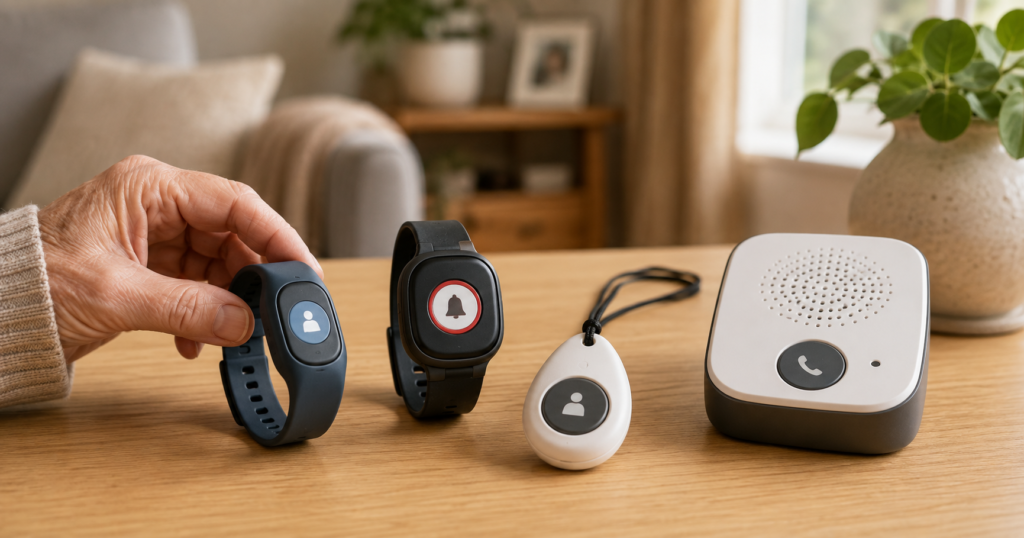
Think carefully about how it will be worn
The most advanced alarm is ineffective if it is left on a bedside table.
Ask the person whether they prefer:
- A necklace-style pendant
- A wristband
- A watch
- A belt or keyring device
- A unit that does not need daily charging
Check whether it can be worn in the shower, how easy the button is to press and whether the speaker can be heard throughout the home.
For someone with reduced hand strength, vision loss, hearing loss or memory difficulties, request a demonstration or trial before making a long commitment.
Make an emergency-access plan
A monitoring centre may contact relatives or emergency services, but responders still need to enter the property.
Consider:
- Who will be listed as emergency contacts?
- Are they close enough and available at night?
- Does the provider need at least two keyholders?
- Is a secure key safe appropriate?
- Who knows the key-safe code?
- What medical and medication information will be stored?
- How will changes be reported to the monitoring centre?
A personal alarm is not a replacement for calling 999 during an immediate emergency when someone is able to make that call.
Understand VAT relief properly
Some prices are displayed without VAT. Age alone does not automatically qualify someone for VAT relief.
HMRC states that eligible alarm systems may be supplied VAT-free when they are for the personal or domestic use of someone who is chronically sick or disabled and meet the relevant product conditions. Read the official VAT-relief guidance and answer the supplier’s declaration accurately.
Ask for both VAT-exempt and VAT-inclusive prices if eligibility is uncertain.
Avoid pressure selling
Older people have been targeted by unsolicited calls and letters offering emergency pendants or claiming that equipment has already been ordered.
Do not provide bank details during an unexpected call. Verify the organisation independently, read the contract and involve a trusted person if the sales approach feels rushed or unclear.
A reputable supplier should explain:
- The full first-year price
- Renewal charges
- Setup and delivery costs
- Equipment ownership or rental
- Cancellation and return arrangements
- Replacement charges
- How personal and location data is used
- What happens when the alarm is activated
Our final verdict
Taking Care is the strongest all-round option because it offers a broad range covering home use, fall detection, GPS support and different wearable styles.
Telecare24 offers the most attractive published entry prices, particularly for a digital fall alarm when paid annually.
Careium is a strong flexible alternative with digital home and outdoor options and no long-term commitment.
LifeConnect24 offers useful digital response features and equipment support, but customers should avoid choosing its cheaper analogue model.
Careline365 is worth considering when automatic fall detection is wanted as standard and the higher initial equipment cost is manageable.
Before ordering, involve the person who will use the alarm, confirm that the device is digital and calculate the total cost rather than comparing monthly prices alone. The best personal alarm is the one the person feels comfortable wearing, understands how to use and can rely on as part of a realistic support plan.
This article provides general consumer information and is not a substitute for personalised health, care or emergency advice. Product details and prices were checked on 19 August 2026 and may change.